Exploring Algorithmic Adjustments in Progressive Jackpot Systems Based on Historical Payout Distributions
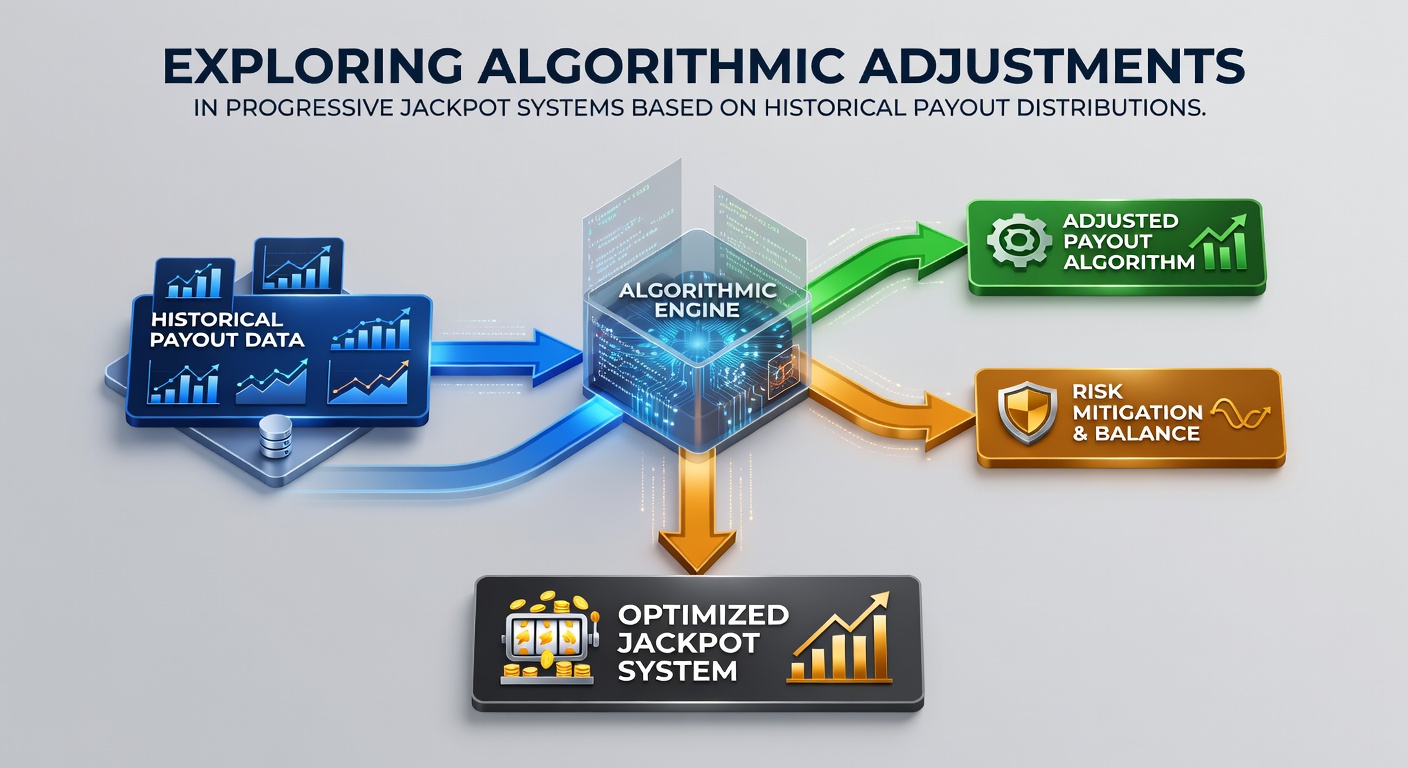
Progressive jackpot systems rely on real-time contribution mechanics that accumulate across linked machines or platforms, and operators have increasingly turned to algorithmic models that recalibrate based on historical payout distributions. These adjustments aim to maintain system stability while responding to observed patterns in win frequencies and amounts. Data from multi-state networks shows that payout clusters often follow non-uniform distributions, prompting developers to refine trigger probabilities and seed values accordingly.
Understanding Historical Payout Data Collection
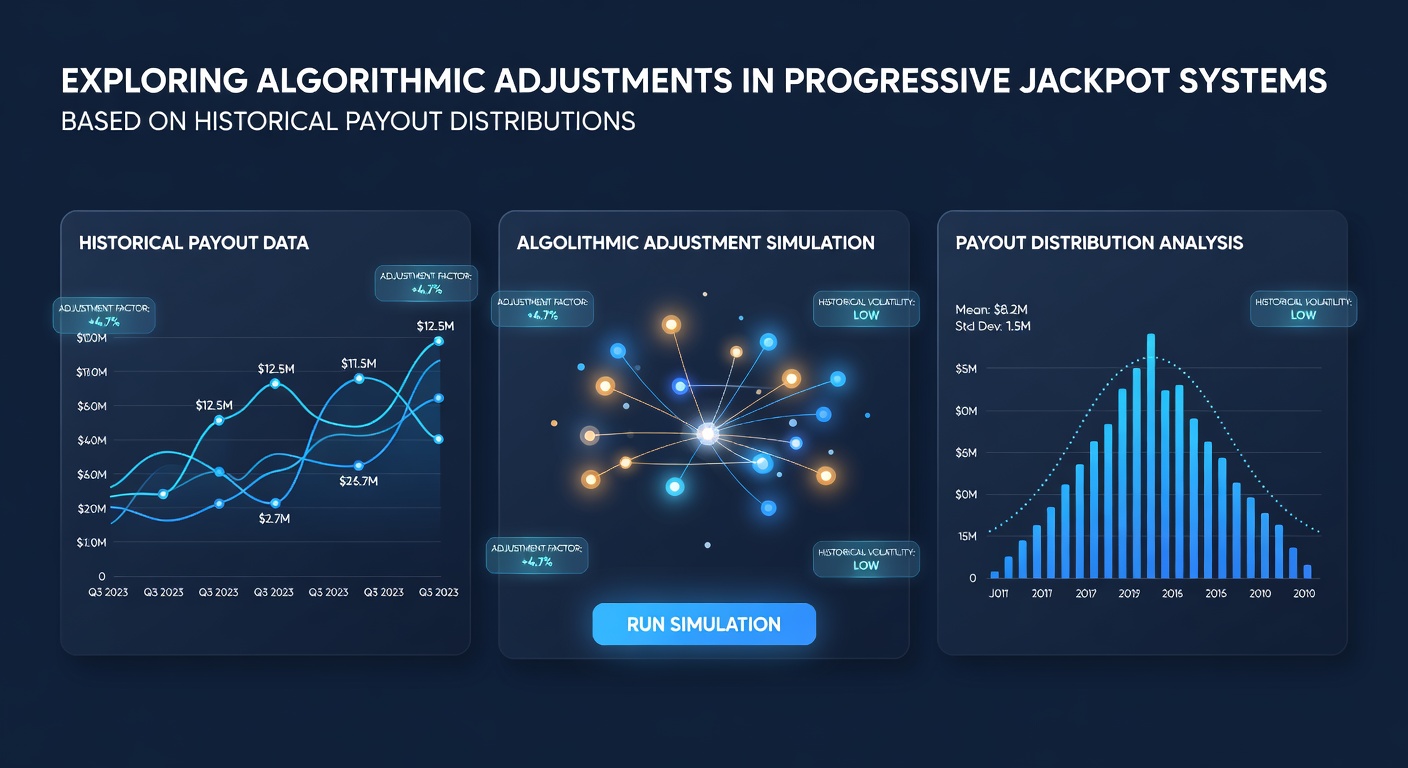
Operators gather payout records through centralized servers that log every jackpot event alongside contribution rates, player volume, and time intervals between wins. In regions such as Nevada and New Jersey, regulatory filings require detailed reporting of these metrics, creating datasets that span years rather than months. Analysts examine frequency distributions to identify whether certain jackpot tiers trigger more often during high-volume periods or after specific contribution thresholds are met.
One study conducted by researchers at the University of Nevada Reno examined five years of slot network data and found that payout events clustered around particular contribution milestones in roughly 68 percent of cases. Such findings have led software providers to incorporate distribution-based weighting into their adjustment algorithms, allowing contribution percentages to shift dynamically without violating minimum return-to-player requirements set by state gaming authorities.
Algorithmic Models and Adjustment Mechanisms
Modern progressive systems employ statistical models that compare current payout trajectories against historical baselines. When observed win rates deviate from expected distributions, the algorithm can modify parameters such as the increment rate per wager or the probability curve for the next trigger. These changes occur within predefined guardrails that prevent abrupt shifts capable of affecting game certification.
Engineers typically use a combination of moving averages and exponential smoothing to smooth out short-term fluctuations while preserving longer-term signals. In practice, a system might lower the contribution rate slightly after a series of rapid payouts if historical records indicate that such clusters rarely repeat within the same fiscal quarter. Conversely, extended dry spells can prompt modest increases to accelerate pool growth toward levels that align with past average intervals.
Regional Implementation Differences
Regulatory environments shape how these adjustments are applied. The Nevada Gaming Control Board requires pre-approval for any parameter changes that affect jackpot odds, which means operators must submit simulation results demonstrating that proposed tweaks remain within approved volatility ranges. In contrast, Australian state regulators allow post-deployment monitoring with mandatory quarterly reviews that compare actual distributions against the original mathematical model.
Canadian provincial gaming corporations have adopted a hybrid approach. Ontario's iGaming framework, for instance, mandates that any algorithmic adjustment affecting progressive pools above a certain threshold receive third-party audit certification before implementation. This process typically involves Monte Carlo simulations run against anonymized historical datasets to verify that the revised distribution stays consistent with previously observed outcomes.
Case Examples from Network Operators
Network operators managing multi-jurisdictional progressive links have documented instances where historical analysis directly influenced parameter changes. In one documented rollout across several European markets, operators noticed that mid-tier jackpots triggered 22 percent more frequently than projected during weekend peak hours. The adjustment algorithm responded by slightly elevating the required contribution threshold during those windows, which brought subsequent payout intervals back into alignment with the five-year average distribution.
Another example comes from a North American operator group that tracked payout data through May 2026. Their records showed an unusual concentration of large wins in the first quarter, prompting a recalibration that reduced seed values for secondary progressives while maintaining the primary pool structure. Internal reports indicated that this change restored the expected payout cadence without requiring manual intervention from floor staff.
Technical Considerations in Model Design
Developers must balance responsiveness against stability when designing these algorithms. Overly sensitive models can produce frequent micro-adjustments that erode player trust, while sluggish responses allow pools to drift far from historical norms. Most current implementations incorporate feedback loops that evaluate adjustment impact over rolling 30-day windows before locking in permanent parameter shifts.
Machine learning components sometimes supplement traditional statistical methods. These systems train on labeled historical sequences to predict the probability of payout clustering under various contribution scenarios. Validation occurs through backtesting against withheld datasets, ensuring the model generalizes beyond the specific period used for training. Regulatory auditors often request access to these validation metrics during certification reviews.
Conclusion
Algorithmic adjustments grounded in historical payout distributions have become standard practice for maintaining progressive jackpot integrity across multiple regulatory jurisdictions. Operators continue to refine these models as new data accumulates, with particular attention paid to regional differences in reporting requirements and approval processes. The approach allows systems to adapt to observed patterns while remaining within the mathematical and regulatory frameworks established for each market.